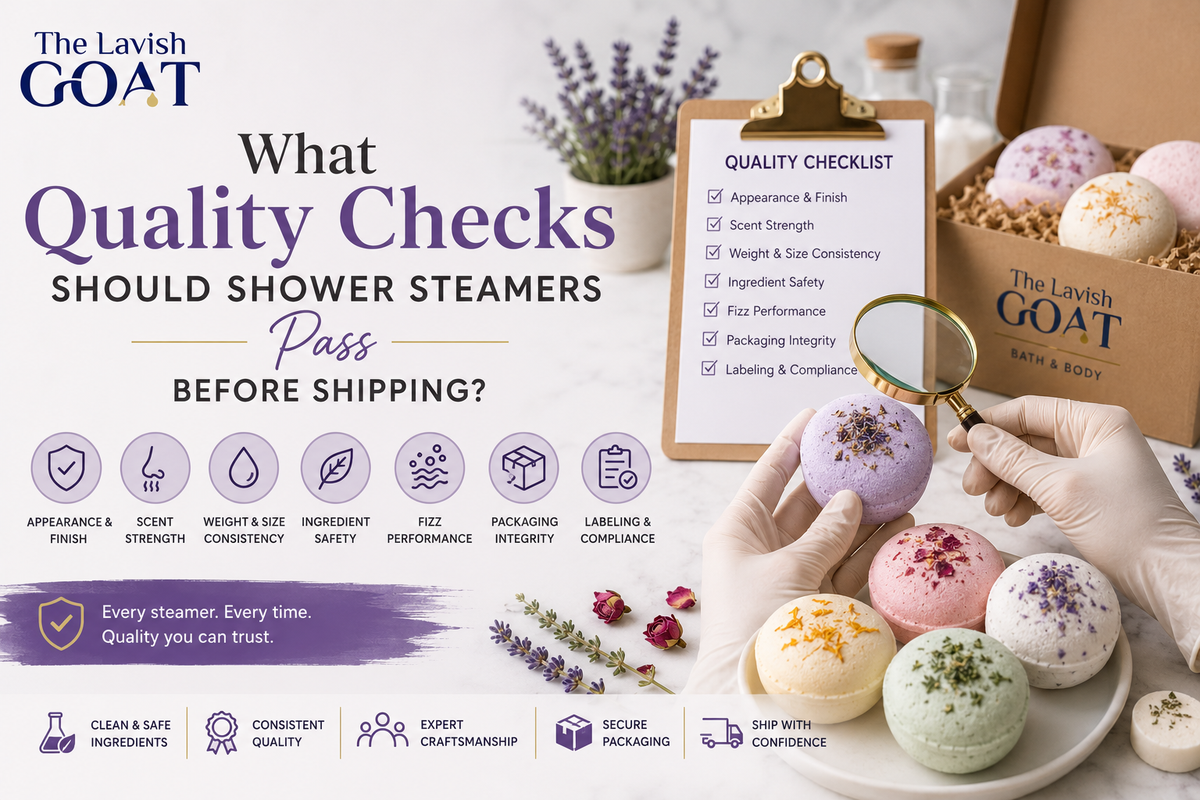
Shower steamers have moved well past novelty status. What started as a bathtub-free alternative to bath bombs has become one of the fastest-growing categories in wellness and personal care, and manufacturers are adapting quickly to keep up with demand that shows no sign of slowing. Industry data continues to point to strong double-digit growth for the aromatherapy shower steamer market, with holiday and post-holiday sales spikes now stretching into a near year-round buying pattern.
For brands, retailers, and manufacturing partners alike, that growth is reshaping how shower steamers get made. Here's what's actually changing on the production floor in 2026, and what it means for anyone building or buying in this category.
1. Clean-Label Formulation Is No Longer Optional
The days of a fragrance blend being an acceptable substitute for real essential oils are fading fast. Shoppers browsing shower steamer listings consistently call out weak or artificial-smelling scents as a top complaint, and that consumer skepticism is pushing manufacturers toward genuine essential oil formulations rather than synthetic fragrance oil shortcuts.
This shift shows up in a few concrete ways on the manufacturing side:
- Suppliers are being vetted more heavily for essential oil purity and sourcing transparency
- Ingredient lists are shrinking, with unnecessary fillers, dyes, and synthetic additives dropped in favor of recognizable components like citric acid, sodium bicarbonate, and named botanical oils
- Batch documentation increasingly includes Certificates of Analysis that brands can pass along to retail partners or publish for consumers
Clean-label isn't just a marketing trend anymore. It's becoming the baseline expectation, and manufacturers who can't document what's actually in their formulas are losing shelf space to those who can.
2. Purpose-Driven Scent Categories Are Replacing Generic Scent Lines
A single "lavender" or "eucalyptus" steamer used to be enough. Now, manufacturers are building entire product lines around specific functional outcomes: stress relief blends built on lavender and clary sage, sinus-support formulas leaning on eucalyptus and mint, sleep-focused evening steamers, muscle-recovery blends aimed at post-workout use, and even comfort-focused formulas marketed around menstrual wellness.
This trend matters for manufacturing because it changes how production runs get planned. Instead of one or two flagship scents produced in bulk, manufacturers are increasingly set up for smaller, purpose-specific batches that rotate more frequently. Retailers are responding by keeping a small core of year-round bestsellers on the shelf while rotating in two or three seasonal or purpose-driven formulas every quarter to keep displays feeling fresh.
3. Small-Batch and Made-in-USA Production Is a Real Differentiator
Bulk overseas manufacturing still dominates the lower end of the market, but 2026 has seen a noticeable shift toward domestic, small-batch production as a selling point in its own right. Shoppers and retail buyers are increasingly reading "Made in USA" and "small-batch" not as feel-good language, but as a proxy for quality control, faster turnaround, and easier accountability if something goes wrong with a formula or a shipment.
For manufacturers, this has meant investing in:
-
Shorter, more flexible production runs that can accommodate private label customization without massive minimum order quantities
-
Faster sample-to-shipment timelines, since domestic buyers expect quicker turnaround than overseas sourcing typically allows
-
Closer collaboration with brands on formulation tweaks, rather than offering a fixed catalog with no customization
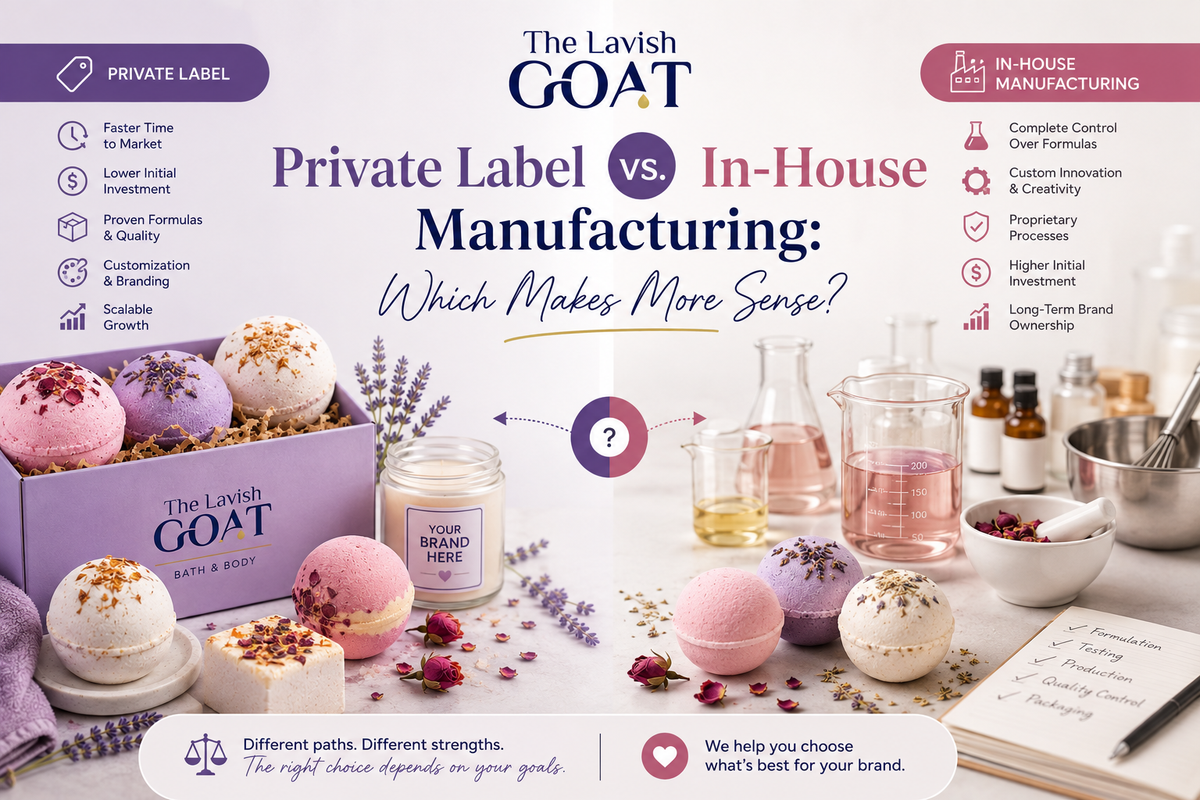
This is also fueling a wave of new private label launches. Because shower steamers are a daily-use, high-repeat-purchase product, a growing number of entrepreneurs are entering the category through private label partnerships rather than building manufacturing capability themselves, which is putting even more pressure on manufacturers to offer flexible, brand-ready production.
4. ISO and GMP Credentials Are Becoming a Buying Requirement, Not a Bonus
As the shower steamer category matures, retail buyers and private label brands are getting more sophisticated about vetting manufacturing partners. ISO certification and documented Good Manufacturing Practices are increasingly treated as non-negotiable, especially now that shower steamers fall more clearly under FDA cosmetic manufacturing oversight following recent regulatory updates.
This is pushing manufacturers to formalize what used to be informal quality processes: documented batch records, ingredient traceability, staff training logs, and facility audits that can be shared with prospective retail partners during vetting. Manufacturers who can produce this paperwork on request are winning larger, more consistent wholesale contracts, while those who can't are increasingly getting filtered out before a deal even gets discussed.
5. Format Innovation Beyond the Basic Round Puck
The classic round, single-scent tablet is still the category workhorse, but manufacturing lines are diversifying in format. Breakable or segmented steamers, which let a single tablet be split into smaller individually-scented pieces, are gaining traction because they give consumers portion control and let brands market multi-use value from a single product. Individually wrapped tablets are also becoming more standard, both for scent preservation and for hygiene appeal in gifting and subscription-box contexts.
On the manufacturing side, this means investment in tooling and packaging lines that can handle more complex shapes and multi-piece packs, rather than a single mold running one shape at a scale.
6. Cross-Category Manufacturing Is Reshaping Production Lines
Manufacturers built around fizzing bath and body chemistry, sodium bicarbonate and citric acid reactions, essential oil blending, and mold-based production, are increasingly using that same infrastructure to produce adjacent products: bath bombs, bath salts, and handmade soaps. This isn't a coincidence. Retailers and private label brands want to expand into a full bath and body line under one label without managing multiple manufacturing relationships, and manufacturers are responding by broadening their production capabilities to serve as a one-stop shop.
For a manufacturer, this cross-category flexibility is becoming a competitive advantage in its own right. A production facility that can pivot between shower steamers, bath bombs, and soap runs on the same core equipment offers brands an easier path to building a complete product catalog, and it gives manufacturers a more resilient, diversified order book that isn't fully dependent on a single product's seasonal demand curve.
7. Eco-Conscious Packaging Is Catching Up to Eco-Conscious Formulas
Clean ingredient formulations have gotten most of the attention over the past few years, but packaging is now facing the same scrutiny. Individually wrapped steamers create real packaging waste at scale, and manufacturers are increasingly being asked to balance the freshness benefits of individual wrapping against growing consumer interest in recyclable, compostable, or minimal packaging options.
Expect to see more manufacturers experimenting with compostable wrap materials, reduced plastic in multi-packs, and packaging suppliers who can certify recyclability, especially as sustainability becomes a stronger purchase driver among the wellness-focused shoppers who make up this category's core audience.
8. Data-Driven Scent and Format Decisions
One trend that's easy to miss because it happens behind the scenes: manufacturers and brands now have far more granular sales and search data available to guide formulation decisions than they did even two or three years ago. Search volume trends, seasonal demand spikes, and detailed customer sentiment data on what shoppers like and dislike about existing products are increasingly shaping which scents get greenlit for production and which get discontinued.
This is shifting product development away from gut-feel decisions and toward a much faster, more responsive formulation cycle, where manufacturers can react to a trending scent profile or a seasonal demand spike in weeks rather than months.
Final Thoughts
The shower steamer category has grown up fast, and manufacturing has had to grow up right along with it. The brands and manufacturers thriving in 2026 aren't the ones simply making more product, they're the ones investing in real formulation quality, documented compliance, flexible small-batch production, and packaging choices that match what today's self-care shoppers actually care about.
For retailers and private label brands evaluating a manufacturing partner this year, the questions worth asking have shifted. It's no longer just "can you make this at scale," but "can you prove what's in it, back it with certifications, and adapt quickly when a scent trend or packaging expectation shifts." That's the bar the category is setting for itself heading into the rest of 2026.
At The Lavish Goat, we see these shifts as a sign of a category maturing in the right direction, one where quality, transparency, and genuine self-care value are finally catching up to the product's popularity.