Here's the short version: bath bombs stain because of their vivid, water-soluble dyes, but you can stop the mess before it starts. Line your tub with a splash of oil or a protective barrier, rinse immediately after your soak, and choose skin-safe, cosmetic-grade colorants whenever you buy or make bath bombs. Follow the steps below, and you'll get all the fizzy, colorful fun without the orange ring around your tub or the tinted elbows the next morning.
Why Bath Bombs Stain in the First Place
Let's be honest: the color is half the fun. Watching a bath bomb fizz, swirl, and turn your bathwater into a glittering lagoon is basically the whole point. But that same pigment is what leaves a ring around your tub or a tint on your skin.
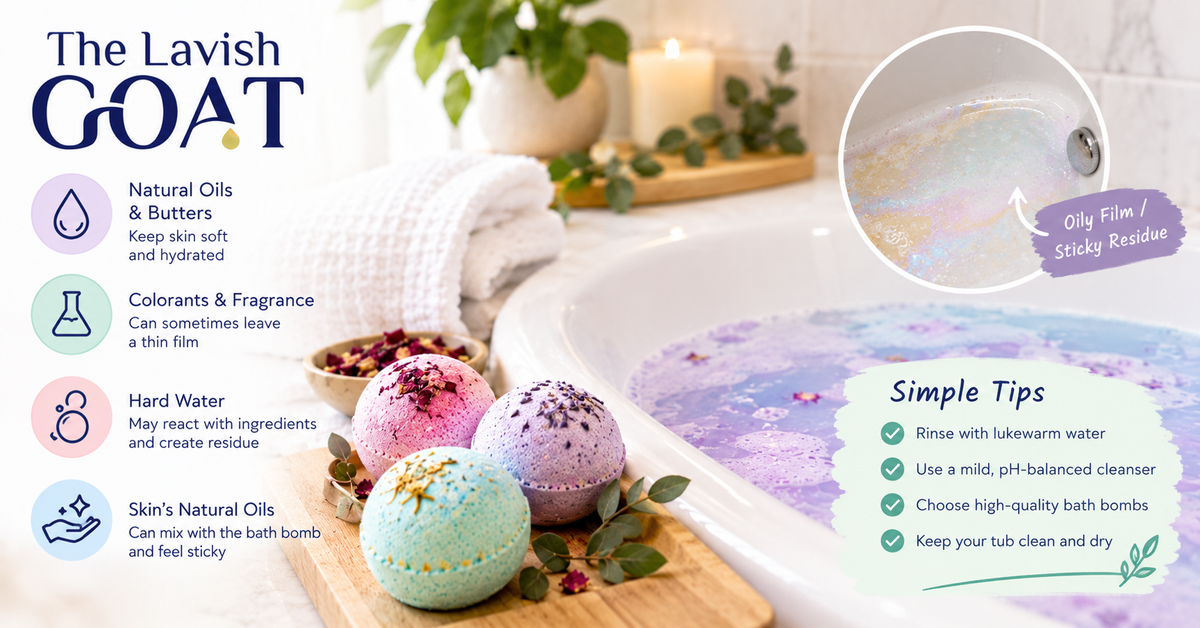
Most bath bombs get their color from one of two sources. Some use natural colorants, like beet powder, turmeric, or spirulina, which tend to be gentler but can still leave a faint tint on porous surfaces. Others use cosmetic-grade dyes (often labeled FD&C or lake colors), which are more vibrant and more likely to cling to tub surfaces, grout lines, and skin.
Here's the key factor: your bathtub's material matters just as much as the dye itself. Acrylic and fiberglass tubs are more porous and stain-prone than enamel or porcelain. Older tubs with hairline scratches or worn finish are especially vulnerable, since dye can settle into those tiny grooves before you even reach for a towel.
Your skin reacts the same way. Dry or freshly exfoliated skin absorbs pigment faster, which is why you might notice color lingering on your hands, feet, or elbows after a soak, even when the rest of your skin rinses clean.
How to Protect Your Bathtub From Stains
The good news? You don't have to give up bath bombs to keep your tub looking brand new. A little prep work goes a long way.
Coat the tub with oil first. Before you run the water, wipe a thin layer of coconut oil, baby oil, or even a silicone-based bathtub spray across the tub's surface. This creates a barrier that keeps dye from settling into the material. Just know that oil makes the tub slippery, so step in carefully and rinse well afterward.
Try a tub liner or mat. A reusable silicone bath mat or a protective liner adds a physical layer between the dye and your tub. It's an easy, no-mess option if you'd rather skip the oil step entirely.
Rinse the moment you're done. This one's non-negotiable. The longer colored water sits in contact with your tub, the more time dye has to settle in. Drain the tub right away, then rinse the sides with warm water while the surface is still wet. Waiting even twenty minutes can turn a quick wipe-down into a scrubbing session.
Wipe down, don't let it air-dry. Grab a soft cloth or sponge and give the tub a once-over with a gentle cleanser right after rinsing. This clears away any residue before it has a chance to set.
Choose bath bombs with skin-safe, cosmetic-grade dyes. Not all bath bombs are created equal. Brands that use lower concentrations of dye, or natural colorants, are far less likely to leave a mark in the first place. If staining has been a recurring issue, it might be time to switch brands or try making your own with controlled, minimal pigment.
How to Protect Your Skin From Stains
Your skin deserves the same consideration as your tub. A few small habits make a big difference.
Moisturize before you soak. Dry skin is thirstier for pigment, so applying a light layer of lotion or oil beforehand actually helps repel dye rather than absorb it. Focus on areas that tend to stain most, like hands, feet, and nails.
Don't linger too long in brightly colored water. The vibrant blues, pinks, and purples are gorgeous, but extended exposure gives pigment more time to settle into your skin. A 15 to 20 minute soak is usually plenty to enjoy the experience without overdoing the dye contact.
Shower right after your bath. Rinsing with clean, running water helps lift any lingering color before it has a chance to set. A quick rinse with a gentle soap is often all it takes.
Watch your nails and cuticles. Nail beds are especially prone to picking up tint, since nail keratin absorbs pigment easily. If you're prone to staining here, consider applying a bit of cuticle oil beforehand, or simply shortening your soak time.
Pick lighter or natural-dye bath bombs if you're sensitive. If you've noticed your skin holds onto color more than most, lean toward bath bombs with softer hues or plant-based colorants. They're just as relaxing, minus the aftermath.
What to Do if Staining Happens Anyway
Even with the best prep, sometimes a stain sneaks through. Don't panic, most bath bomb stains are temporary and easy to fix with things you already have at home.
For your bathtub:
- Make a paste with baking soda and a splash of water, then scrub the stained area with a soft sponge.
- For tougher spots, add a bit of white vinegar or hydrogen peroxide to the paste for extra lifting power.
- Let the paste sit for 5 to 10 minutes before rinsing, this gives it time to break down the pigment.
- Avoid abrasive scrubbers on acrylic tubs, since they can scratch the surface and make future staining worse.
For your skin:
- Wash the area with warm water and a gentle exfoliating scrub or washcloth.
- Rub a small amount of coconut oil or olive oil onto the stained skin, then wipe away with a cloth. Oil helps break down pigment that water alone can't budge.
- A dab of toothpaste (the non-gel kind) on stained fingertips can also help lift lingering color.
- Most skin stains fade naturally within a day or two, even if they don't come off completely the first time.
The Bottom Line
Bath bombs are too much fun to give up over a little dye. With a quick oil barrier, a prompt rinse, and skin-safe colorants, you can keep both your tub and your skin stain-free. And if color does sneak through, a baking soda scrub or a little coconut oil usually solves it in minutes.
So go ahead, drop that bath bomb in, watch it fizz, and soak up every colorful second. Your tub (and your skin) will thank you.