yes, bath bombs can cause itching or skin irritation, and it usually comes down to a handful of repeat-offender ingredients, not the bath bomb trend itself. Fragrance oils, synthetic dyes, SLS, and certain essential oils are the most common triggers, and people with sensitive, eczema-prone, or allergy-prone skin are most likely to notice a reaction. The good news is that a little label-reading goes a long way. Below, we break down exactly which ingredients to watch for, how to tell normal fizzy tingling from an actual reaction, and how to pick bath bombs your skin will actually love.
Can Bath Bombs Really Irritate Your Skin?
Yes, bath bombs can absolutely irritate your skin, and honestly, that surprises a lot of people. These colorful, fizzy balls look so harmless sitting in their pretty packaging that it's easy to forget they're a concentrated mix of active ingredients designed to react the moment they hit water.
Here's what's happening beneath all that fizz. A typical bath bomb combines baking soda and citric acid to create that satisfying fizzing reaction, then adds fragrance, color, oils, and sometimes glitter or dried flowers on top. Each of those ingredients is doing its own thing to your skin, and when you soak in that mixture for twenty minutes, your skin barrier is essentially marinating in it.
For most people, this is totally fine. But if you have sensitive skin, a compromised skin barrier, or specific allergies, that same soak can leave you with redness, itching, tightness, or small bumps. It's not that bath bombs are inherently bad for skin. It's that certain ingredients inside them are more likely to cause trouble than others, and that's exactly what we're digging into next.
Ingredients to Check Before You Buy
Think of this as your bath bomb label cheat sheet. Flip the package over and scan for these before you toss one in your cart.
Synthetic fragrance (parfum/fragrance). This is the number one culprit behind itching and irritation, full stop. "Fragrance" can legally hide dozens of undisclosed chemical compounds, and it's one of the most common skin allergens around. If a bath bomb smells intensely like cupcakes or a candy store, assume it's loaded with synthetic fragrance.
Essential oils. Natural doesn't always mean gentle. Citrus oils, cinnamon, clove, and peppermint are known irritants, especially at high concentrations or on skin that's already dry or broken. They can also make your skin more sensitive to sunlight for a few hours after your bath.
Sodium Lauryl Sulfate (SLS). This foaming agent is a classic skin-barrier disruptor. It strips natural oils and can leave skin feeling tight, dry, and itchy afterward, particularly for anyone with eczema or a naturally dry complexion.
Synthetic dyes (FD&C or D&C colors). Those gorgeous swirling colors come from artificial dyes, and some of them are notorious for triggering contact dermatitis. Bright, saturated colors are usually a sign of heavier dye use.
Citric acid (in high amounts). A little citric acid is what makes bath bombs fizz, and most people tolerate it fine. But in higher concentrations, it can sting broken skin, irritate sensitive areas, or cause mild itching, especially if you have a cut, shave rash, or eczema flare.
Glitter and dried botanicals. They look lovely floating in the water, but microplastic glitter and rough dried petals can physically irritate skin and even clog pores or scratch delicate areas.
Mineral oil and synthetic emollients. Not irritating on their own, but they can sit on the skin's surface and trap other irritating ingredients against it for longer, which can intensify a reaction.
Who's Most Likely to React
Not everyone needs to worry equally here. A few groups tend to be more sensitive to bath bombs:
- People with eczema, psoriasis, or rosacea. A compromised skin barrier lets irritants penetrate more easily and reacts faster to fragrance and SLS.
- Anyone with known fragrance or dye allergies. If perfumes or scented lotions already bother you, bath bombs are likely to do the same, just concentrated into bathwater.
- Kids and people with naturally thin or dry skin. Their skin barrier is more delicate, so even a "gentle" bath bomb can cause unexpected redness.
- People shaving, exfoliating, or using retinoids or acids. Freshly shaved or exfoliated skin is more porous, which means a bath bomb's ingredients can penetrate deeper and sting more.
If you fall into any of these categories, that doesn't mean bath bombs are off-limits. It just means ingredient labels deserve a closer look before you drop one in the tub.
Normal Tingling vs. a Real Reaction
Here's a question we get a lot: is a little tingling normal, or is that your skin waving a red flag? There's actually a real difference.
A mild, brief tingle right when you step into a fizzing bath bomb is usually just the citric acid and carbonation doing their thing. It should fade within a few minutes and shouldn't come with redness, swelling, or an urge to scratch.
Real irritation looks different. Watch for redness that lingers after your bath, itching that intensifies rather than fades, small bumps or hives, dry or flaky patches in the days after, or a burning sensation that doesn't quietly go away. If you notice any of these, that's your skin telling you something in that bath bomb didn't agree with it.
How to Pick a Skin-Friendly Bath Bomb
The good news: you don't have to give up bath bombs, you just need to shop a little smarter. Here's how to stack the odds in your skin's favor.
- Read the full ingredient list, not just the front label. "Natural" and "gentle" on the packaging don't guarantee a short, clean ingredient list.
- Choose fragrance-free or naturally scented options. Look for pure essential oils used in low concentration, or skip scent altogether if you're prone to reactions.
- Avoid intensely bright or neon colors. They're usually a sign of heavier synthetic dye.
- Look for SLS-free formulas. Some brands swap it for gentler surfactants that don't strip the skin barrier as aggressively.
- Patch test new bath bombs. Dissolve a small piece in water and dab it on your inner arm, then wait 24 hours before a full soak.
- Keep bath time shorter. A 10 to 15 minute soak gives irritants less time to sit against your skin than a 45-minute one.
- Rinse off after your bath. A quick rinse with plain water helps remove any lingering fragrance, dye, or oil residue before it dries on your skin.
If a Bath Bomb Irritates Your Skin, Do This
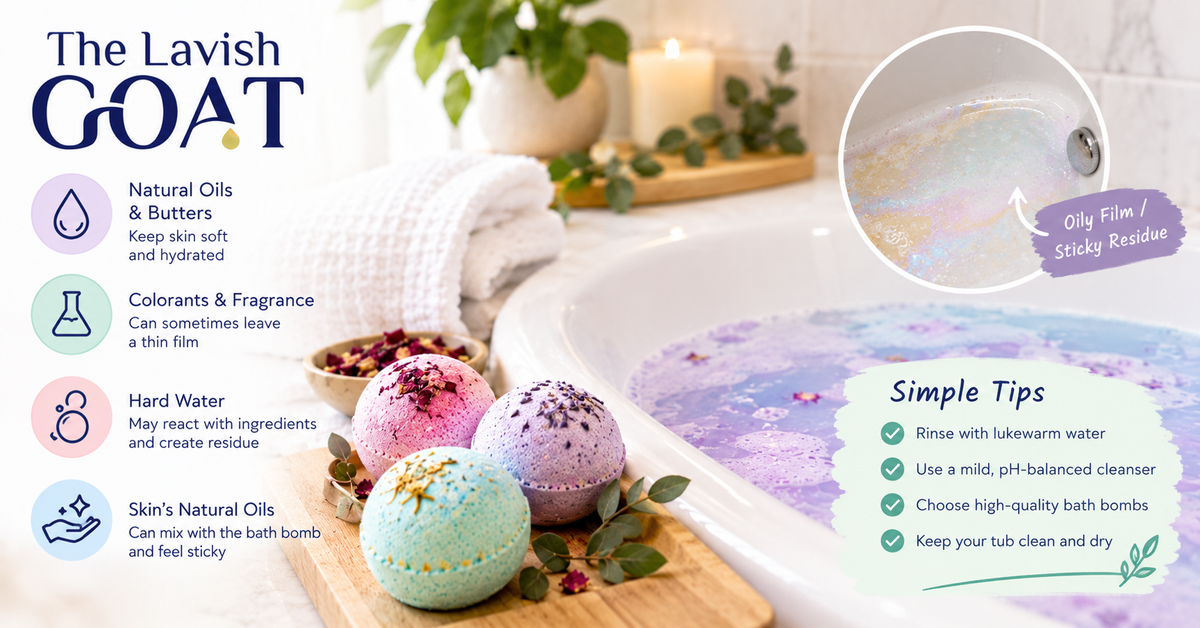
First things first: don't panic, this is usually easy to calm down. Rinse off with lukewarm water right away to remove any remaining residue, then pat your skin dry instead of rubbing it. Follow up with a fragrance-free, gentle moisturizer to help rebuild your skin barrier. A cool compress can take the edge off any itching or burning in the first hour or two.
Avoid hot showers, exfoliants, and other scented products for a day or so while your skin settles. If redness or itching sticks around for more than a couple of days, spreads, or comes with swelling or blistering, it's worth checking in with a dermatologist, since that can signal a more significant allergic reaction that benefits from proper treatment.
The Bottom Line
Bath bombs aren't the enemy, but a handful of their ingredients can definitely cause itching or irritation if your skin is sensitive, dry, or prone to allergies. The fix isn't giving up bath time fun, it's getting a little curious about what's actually in that fizzy sphere before it hits the water. Skip the synthetic fragrance and bright dyes, keep an eye on SLS and essential oil concentrations, and your skin will thank you with every soak. A great bath bomb should leave you relaxed, not reaching for the calamine lotion.