Scroll through any wellness feed right now and you'll see the same thing on repeat: hand-poured soap bars with swirled botanicals, shower steamers dusted with dried flowers, bath bombs labeled with the name of the person who made them. Handmade bath products aren't just having a moment in 2026, they've become one of the defining categories in personal care. What used to feel like a niche craft-fair indulgence is now showing up on the shelves of major retailers, in subscription boxes, and at the center of gifting culture.
So what's actually driving this shift? It's not one trend but several converging at once, touching on how people think about wellness, ingredients, sustainability, and even how they want to spend their money.
1. The Self-Care Economy Matured Into Something More Intentional
Self-care as a concept exploded years ago, but 2026 marks a shift from performative self-care toward something more deliberate. People are less interested in buying whatever's trending on social media and more interested in products that feel considered. Handmade bath products fit this shift naturally. A bar of soap poured in small batches, cured for weeks, and finished by hand communicates a level of care that mass production simply can't replicate visually or emotionally.
This isn't just about vanity metrics like unboxing videos, though those help. It's about consumers wanting their evening routine to feel like a ritual rather than a transaction. A handmade bath product signals slowness in a culture that has otherwise sped up.
2. Ingredient Transparency Is Now a Baseline Expectation
Consumers today read labels the way they used to read nutrition facts. They want to know what's in their products and why. Handmade and small-batch bath brands tend to lead on this front because they're often formulated by people who can explain, ingredient by ingredient, what each component does and where it came from.
Large commercial manufacturers frequently rely on proprietary fragrance blends or filler ingredients that keep costs down but leave consumers guessing. Handmade brands, by contrast, tend to publish full ingredient lists, talk openly about sourcing, and market around what's absent, no parabens, no synthetic dyes, no mystery fragrance blends. In 2026, that kind of transparency isn't a bonus feature; for a growing number of shoppers, it's the deciding factor between one bath product and another.
3. Sustainability Concerns Reshaped Purchasing Habits
Environmental awareness has moved from a fringe consideration to a mainstream purchasing filter, and bath products are a category where sustainability is easy to see and feel. Plastic-free packaging, biodegradable ingredients, and low-waste production methods are now standard expectations rather than premium add-ons.
Handmade producers, often working at smaller scale, are better positioned to offer this. A small operation can package soap in compostable paper, use minimal branding, and source local ingredients in a way that's much harder for a large factory-line operation to replicate without a complete overhaul. Shoppers looking to reduce their environmental footprint are gravitating toward bath products that visibly reflect those values, right down to the packaging in their recycling bin.
4. The Post-Pandemic Home Spa Habit Never Really Left
The home spa trend that took off years ago didn't fade once the world reopened, it evolved. People got used to creating restorative moments at home, and bath time became one of the easiest, lowest-cost ways to do that. Where a spa day requires an appointment and a drive, a shower steamer or a hand-poured bath soak requires nothing but five minutes and running water.
In 2026, this habit has settled into a permanent part of many people's routines. And as it settled in, expectations rose. People aren't satisfied with generic drugstore bath products anymore; they want something that feels special enough to justify the ritual, which naturally points them toward handmade and artisanal options.
5. Small Businesses Are Winning on Story and Connection
Social platforms have made it easier than ever for small bath and body businesses to build a following without a traditional advertising budget. A soap maker showing their pouring process, a shower steamer brand explaining their sourcing decisions, or a founder sharing why they started their business creates a kind of connection that big brands struggle to manufacture authentically.
This matters because purchasing decisions in the bath and beauty space are increasingly emotional rather than purely functional. People aren't just buying a product, they're buying into a story, a set of values, and often a direct relationship with the maker. Handmade brands are uniquely suited to this kind of marketing because the story is usually true, not manufactured for a campaign.
6. Gifting Culture Shifted Toward Thoughtful, Personal Items
Handmade bath products have become a go-to gift category, and that shift has only accelerated. Compared to mass-produced gift sets, handmade options feel more personal, more unique, and often more shareable when unboxed. They hit a sweet spot: affordable enough for casual gifting, but distinctive enough to feel intentional rather than generic.
This has pushed brands to lean into gift-ready presentation, from seasonal scent collections to curated bundles designed specifically for birthdays, holidays, and self-care gifting occasions. The handmade label itself has become part of the appeal, positioning a product as something crafted for the recipient rather than pulled off an assembly line.
7. Wellness and Aromatherapy Interest Continues to Grow
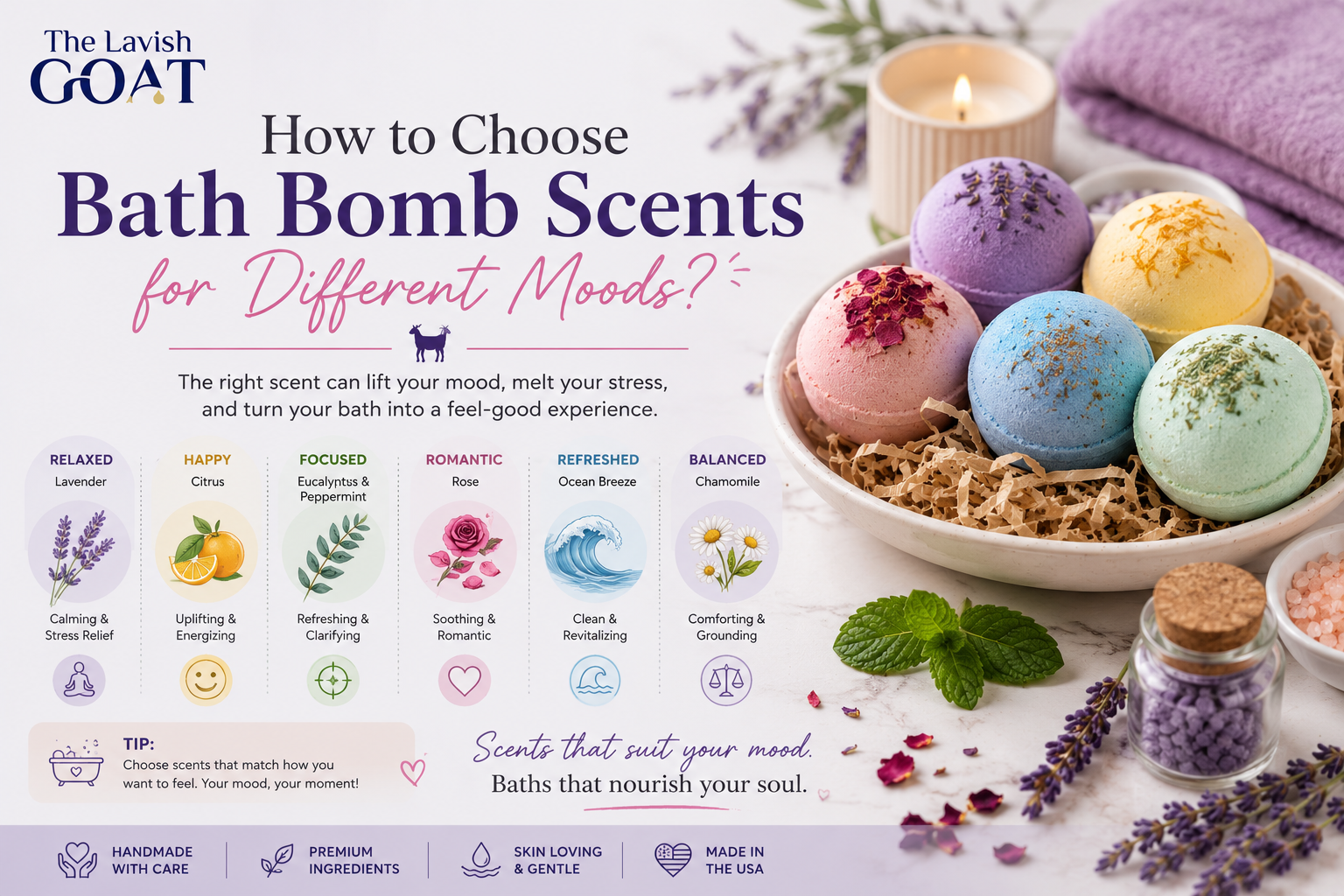
Interest in aromatherapy and functional wellness ingredients, think eucalyptus for congestion, lavender for sleep, citrus for energy, has steadily grown, and handmade bath products are often where people first experiment with these ingredients. Small-batch makers are more willing to formulate around specific moods or needs, offering a level of customization that larger commercial lines rarely match.
This ties back into the broader wellness movement, where people are looking for accessible ways to support their mood, sleep, and stress levels without turning to medication or expensive treatments. A shower steamer with eucalyptus and peppermint or a bath soak with chamomile and oat milk taps directly into that desire.
The Bottom Line
The rise of handmade bath products in 2026 isn't a passing aesthetic trend, it reflects deeper shifts in how people think about self-care, ingredients, sustainability, and the businesses they choose to support. At The Lavish Goat, we see this every day in the way customers talk about our products, not just as items they use, but as small rituals they look forward to. As long as people keep craving intentionality in their daily routines, handmade bath products aren't going anywhere.