Here's the short answer: if you're serious about building a brand people remember, private label packaging wins almost every time. Generic packaging might save you a few bucks upfront, but it quietly costs you customer loyalty, shelf appeal, and repeat sales. In this post, we'll break down exactly how these two options stack up — from cost and branding to customer trust — so you can make the smartest call for your business, whether you're selling candles, skincare, or a line of Bath Bombs, Shower Steamers, and other bath-time favorites.
Let's dig in.
What's the Real Difference Between Private Label and Generic Packaging?
Before we compare pros and cons, let's get on the same page.
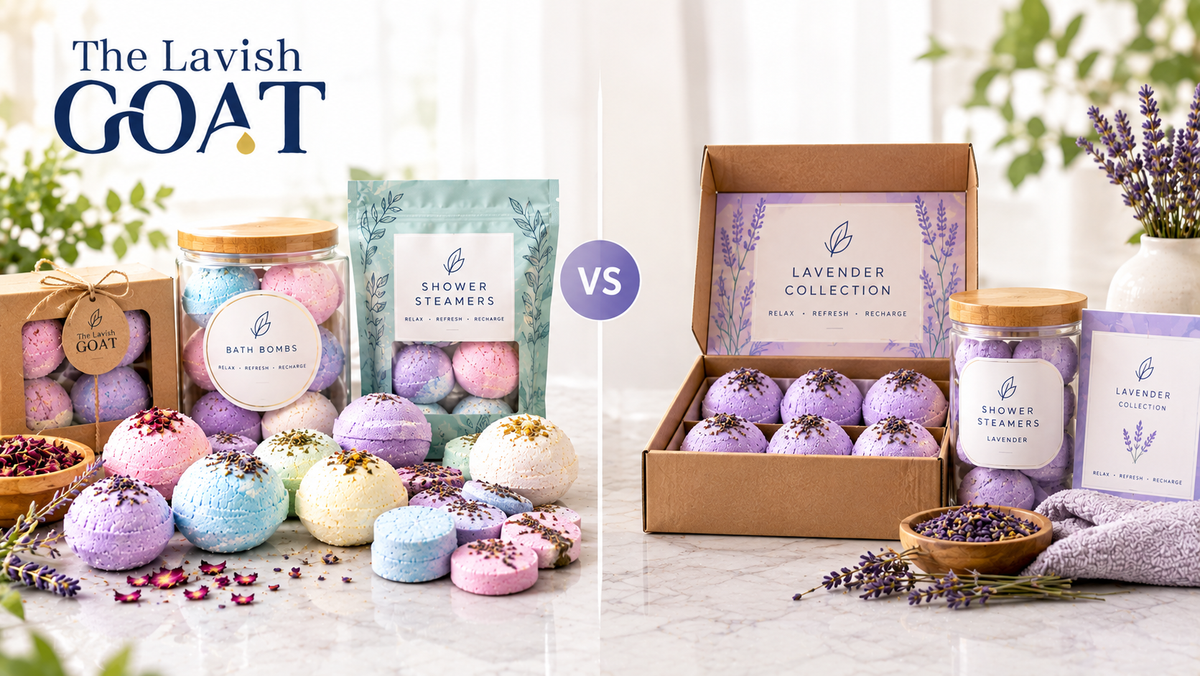
Private label packaging is custom-designed for your brand. Your logo, your colors, your fonts, your vibe — it's all there. You're working with a supplier (or manufacturer) who makes the product, but you control how it looks and feels in the customer's hands.
Generic packaging, on the other hand, is the plain, off-the-shelf option. Think unbranded boxes, stock labels, or packaging that looks the same whether it's sold by you or your competitor down the street.
Both get the job done in terms of function. But when it comes to building something people actually recognize and trust? That's where the real differences start to show up.
Why First Impressions Matter More Than You Think
Let's be honest — people judge products by their packaging. It happens in seconds, often before anyone reads a single word about what's inside.
Imagine two shelves side by side. One has a plain white box with a sticker label. The other has a thoughtfully designed package with cohesive branding, a clear message, and a little personality. Which one are you reaching for?
That's the power of private label packaging. It signals quality before the customer even opens the box. And in industries like bath and body — where Bath Bombs, Shower Steamers, and other self-care products are often bought as gifts or little indulgences — presentation really does influence the purchase decision.
Generic packaging, by contrast, can make even a great product feel like an afterthought. It's not that it looks bad, necessarily. It just looks forgettable.
The Branding Factor: Why Private Label Packaging Builds Loyalty
Here's something a lot of new brand owners don't realize right away: packaging is marketing.
Every time someone sees your product — on a shelf, in an unboxing video, sitting on their bathroom counter — your packaging is doing the talking. With private label packaging, that message is consistent. Your customers start to recognize your brand at a glance, which builds familiarity, and familiarity builds trust.
This matters even more for consumable self-care items. When someone finds a Bath Bombs, Shower Steamers, or lotion brand they love, they want to be able to spot it again instantly, whether they're restocking online or browsing in a store. Custom packaging makes that possible. Generic packaging makes it a lot harder, because nothing about it ties back to you specifically.
Over time, this consistency compounds. Customers aren't just buying a product anymore — they're buying into a brand experience. And that's incredibly hard to build with generic packaging alone.
Let's Talk Cost (Because It Matters)
Okay, we have to address the elephant in the room: private label packaging usually costs more upfront.
Custom boxes, branded labels, specialty inserts — all of that requires design work, minimum order quantities, and sometimes a longer lead time. If you're just starting out or testing a new product line, that investment can feel like a lot.
Generic packaging is cheaper and faster. There's no denying that. If you're bootstrapping or need to get a product to market quickly, it can be a practical short-term solution.
But here's the thing — "cheaper" doesn't always mean "better for your bottom line." When your packaging doesn't differentiate you, you often end up competing on price instead of brand value. And competing on price is a race to the bottom nobody really wins.
Private label packaging, while pricier initially, tends to pay for itself through:
- Higher perceived value (which supports better pricing)
- Increased repeat purchases from brand recognition
- Stronger word-of-mouth and social sharing (pretty packaging gets photographed!)
- Better shelf presence in retail environments
So the real question isn't "which option is cheaper?" It's "which option gives you a better return over time?"
Customer Trust and Transparency
We're big believers in transparency here at The Lavish Goat, so let's keep it real: customers are smarter than ever, and they notice when a brand puts thought into the details.
Private label packaging gives you the space to communicate directly with your customers. You can include your ingredients list, your brand story, usage instructions, or even a little note that makes the unboxing feel personal. For something like Bath Bombs, Shower Steamers, or other self-care products, that personal touch matters. People want to feel like they're treating themselves to something made with care, not something pulled off a generic assembly line.
Generic packaging doesn't offer that same opportunity. It's functional, but it's impersonal. And in a market where customers increasingly want to know who they're buying from and what a brand stands for, impersonal packaging can actually work against you.
When Generic Packaging Might Make Sense
To be fair, private label packaging isn't automatically the right choice for every single business at every single stage. There are situations where generic packaging is a reasonable move:
- You're testing a brand-new product idea and don't want to invest heavily before validating demand
- You're working with extremely tight margins and need to launch fast
- You're selling in bulk to other businesses who will repackage the product themselves
- You're still finalizing your brand identity and aren't ready to commit to a design
If any of these sound like you, generic packaging can be a smart stepping stone. The key word there is "stepping stone." Most successful brands eventually transition to private label packaging once they've found their footing, because that's when branding starts to really matter for growth.
How to Decide What's Right for Your Brand
So, how do you actually choose? Here are a few honest questions to ask yourself:
1. What's your growth goal?
If you're planning to build a recognizable, long-term brand, private label packaging is almost always worth the investment. If you're testing an idea short-term, generic might make sense for now.
2. Who's your customer?
Self-care and gift-driven products — like Bath Bombs, Shower Steamers, candles, and skincare — tend to benefit heavily from private label packaging because presentation is part of the experience customers are paying for.
3. What's your budget, realistically?
Be honest about what you can afford without compromising quality elsewhere. Starting with a simpler custom design is often better than overspending on packaging you can't sustain.
4. How do you want customers to feel?
Packaging sets the tone. Private label packaging lets you shape that tone intentionally. Generic packaging leaves it mostly up to chance.
Once you answer these honestly, the right path usually becomes pretty clear.
The Bottom Line
Generic packaging isn't the enemy — it has its place, especially for brands just getting off the ground. But if your goal is to build something customers recognize, trust, and come back to again and again, private label packaging is the stronger long-term investment.
It's not just about looking pretty on a shelf (although, let's be honest, that doesn't hurt). It's about creating a consistent, trustworthy experience every time someone interacts with your brand — whether that's unboxing a candle, restocking their favorite lotion, or treating themselves to a new batch of Bath Bombs, Shower Steamers, and other self-care essentials.
At the end of the day, your packaging is often the first conversation you have with a customer. Make it one worth remembering.