Thinking about starting your own bath and body line but stuck on the money question? Here's the short answer: most entrepreneurs launch a private label bath and body brand for anywhere between $3,000 and $25,000, depending on how lean or premium you want to go. The real cost hinges on a handful of factors — your product line size, packaging choices, minimum order quantities, branding, and marketing spend. In this guide, we'll break down exactly where your money goes when you invest in Private Label Bath and Body Products, so you can plan your launch with confidence instead of guessing.
Why Private Label Is the Smart Entry Point
Before we get into numbers, let's talk about why private label makes sense in the first place. Building a bath and body brand from scratch — formulating your own soaps, lotions, and scrubs — takes serious time, chemistry knowledge, and capital. Private label flips that script. You partner with an established manufacturer who already has tested, compliant formulas, and you simply apply your own branding, packaging, and story on top.
This means you skip the expensive R&D phase entirely. You're not paying for lab trials, stability testing, or formula tweaks that can eat up months and thousands of dollars. Instead, your budget goes toward the things that actually build your brand: design, packaging, and getting product into customers' hands.
The Core Cost Categories
Let's get specific. Every private label bath and body launch breaks down into these main expense buckets.
1. Minimum Order Quantities (MOQs)
This is usually the biggest line item, and it varies wildly by supplier. Some manufacturers offer low MOQs starting around 50 to 100 units per SKU, which is perfect for testing the waters. Others require 500 to 1,000 units per product, which brings your per-unit cost down but demands more upfront cash.
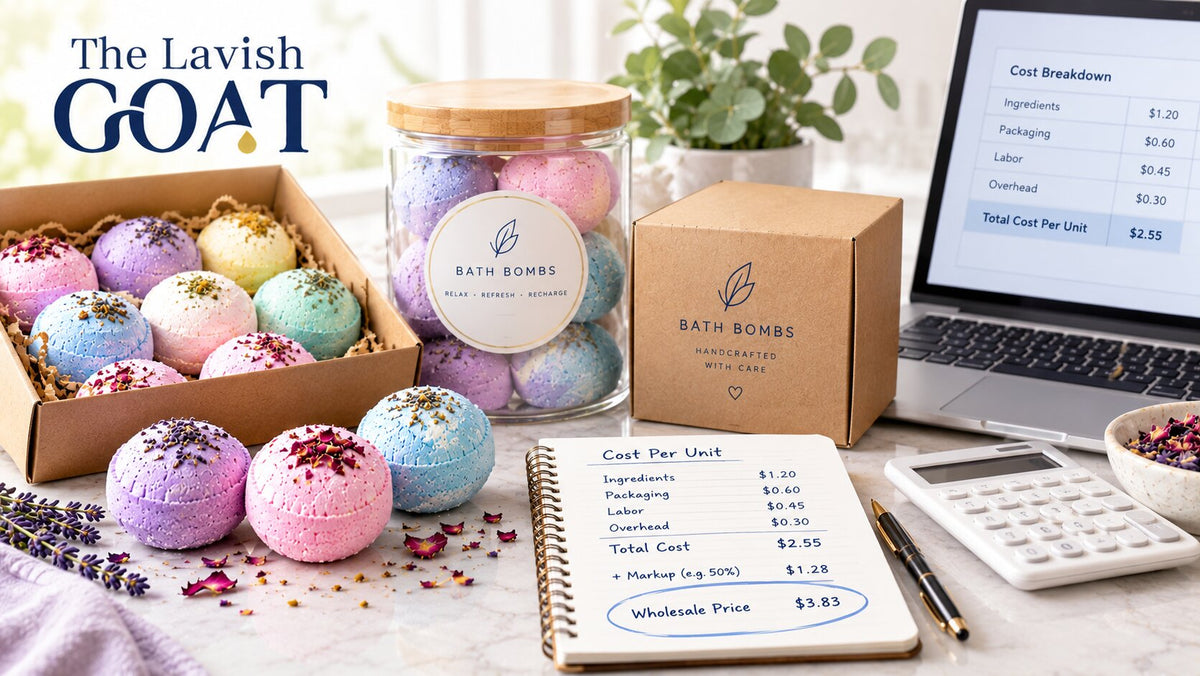
For a starter line of three to five products (say, a bar soap, a body lotion, and a bath bomb), you're typically looking at $1,500 to $6,000 just to cover initial inventory, assuming moderate MOQs and mid-range formulations. Go with a boutique manufacturer offering small-batch runs, and you can launch for less. Choose a larger factory with bulk pricing, and your per-unit cost drops, but your total order size climbs.
2. Packaging and Labeling
Here's where a lot of brands underestimate their budget. Packaging isn't just a container — it's your silent salesperson on the shelf. Custom bottles, jars, boxes, and labels can range from $0.50 to $3.00 per unit depending on materials and finishes.
If you want something that feels premium — think frosted glass jars, embossed labels, or eco-friendly kraft packaging — expect to pay more per unit but gain a stronger brand impression. Budget-friendly stock packaging with a custom label applied on top is the most affordable route, often keeping packaging costs under $1 per unit.
Don't forget the design cost itself. Hiring a freelance designer for label artwork typically runs $200 to $800 for a small product line, while a full brand identity package (logo, color palette, packaging templates) can run $500 to $2,500 depending on the designer's experience.
3. Branding and Legal Basics
Every legitimate business needs a foundation. This includes:
- Business registration (LLC formation): $50 to $500 depending on your state
- Trademark filing (optional but recommended): $250 to $750 per class
- Barcodes (UPC codes): roughly $30 to $250 depending on how many you need
- Website domain and basic e-commerce setup: $100 to $500 for the first year, more if you hire help
None of these are dealbreakers financially, but they add up. Budget around $500 to $1,500 to cover the legal and administrative side of getting your brand off the ground properly.
4. Website and E-Commerce Platform
Most new brands start selling online before pursuing retail. Platforms like Shopify are the go-to choice, with plans starting around $39 per month. Add a professional theme, some apps for reviews and email marketing, and maybe a freelancer to help with setup, and your first-year website cost typically lands between $500 and $2,000.
If you'd rather sell through Amazon or Etsy first, you'll save on website costs but pay platform fees per sale instead — worth factoring into your pricing strategy either way.
5. Product Photography
Bath and body products live and die by how good they look online. Soft, inviting product photography can make or break conversion rates. A DIY approach with a smartphone, natural light, and a simple backdrop can cost you next to nothing beyond your time. Hiring a professional product photographer typically runs $300 to $1,200 for a small catalog shoot, including styled lifestyle images.
If your budget allows for it, this is genuinely one of the highest-ROI investments you can make early on.
6. Marketing and Launch Budget
This is the category most new founders shortchange, and it's a mistake. Even the best-formulated, best-packaged product won't sell itself. Plan to set aside at least $500 to $3,000 for your initial marketing push, covering things like:
- Influencer seeding (sending free product to micro-influencers)
- Paid social ads on Instagram or TikTok
- Email marketing tools
- Launch giveaways or bundles
Brands that skip this step often end up with a beautiful product line and zero traction. Don't let that be you.
Putting It All Together: Realistic Budget Tiers
To make this easier to digest, here's how the numbers typically shake out across three common launch styles.
Lean Startup Launch (~3,000–6,000)
Small MOQs, stock packaging with custom labels, DIY photography, minimal legal setup, modest marketing spend. This is a great option if you want to test demand before scaling up.
Mid-Range Brand Launch (~8,000–15,000)
Moderate MOQs across four to six SKUs, semi-custom packaging, professional photography, a properly built website, trademark filing, and a real marketing budget. This is the sweet spot for most serious first-time founders.
Premium Brand Launch (~18,000–25,000+)
Larger MOQs, fully custom packaging and formulations, professional branding agency work, a robust content and influencer strategy, and possibly a soft launch event. This tier suits founders with existing capital or investors who want to enter the market with a polished, retail-ready look from day one.
Ways to Lower Your Launch Costs Without Cutting Corners
The good news? You don't need the biggest budget to build a great brand. Here are a few smart ways to stretch your dollars further.
Start with a smaller product line. Launch with two or three hero products instead of a full ten-item catalog. You can always expand once you have revenue coming in.
Choose a supplier with low MOQs. Many private label manufacturers specifically cater to startups and offer flexible order sizes, letting you test the market before committing to bulk inventory.
Use stock packaging with a killer label. A beautifully designed label on a simple, clean bottle often looks just as premium as fully custom molded packaging, at a fraction of the cost.
Lean into organic marketing first. Before spending on ads, build momentum through social content, community engagement, and word of mouth. It costs time rather than money, and often builds more authentic brand loyalty.
Negotiate with your manufacturer. Many suppliers are open to adjusting terms for first-time buyers, especially if you're upfront about your budget and long-term intentions to reorder.
Final Thoughts
Launching your own line of Private Label Bath and Body Products doesn't require a massive war chest, but it does require a realistic plan. Whether you're working with $3,000 or $25,000, the key is understanding exactly where your money is going and prioritizing the categories that actually move the needle: quality packaging, strong branding, good photography, and enough marketing to get eyes on your product.
Start lean, learn from your first launch, and reinvest as you grow. Some of the most successful bath and body brands today started with a handful of SKUs and a shoestring budget. What set them apart wasn't the size of their initial investment — it was the clarity of their brand and the consistency of their execution.
So, before you get overwhelmed by spreadsheets and supplier quotes, remember this: you don't need everything perfect on day one. You just need a solid product, a clear brand identity, and a plan to get it in front of the right people. The rest can grow from there.